Turning questions into better quality of life through Speech, Language & Hearing Sciences
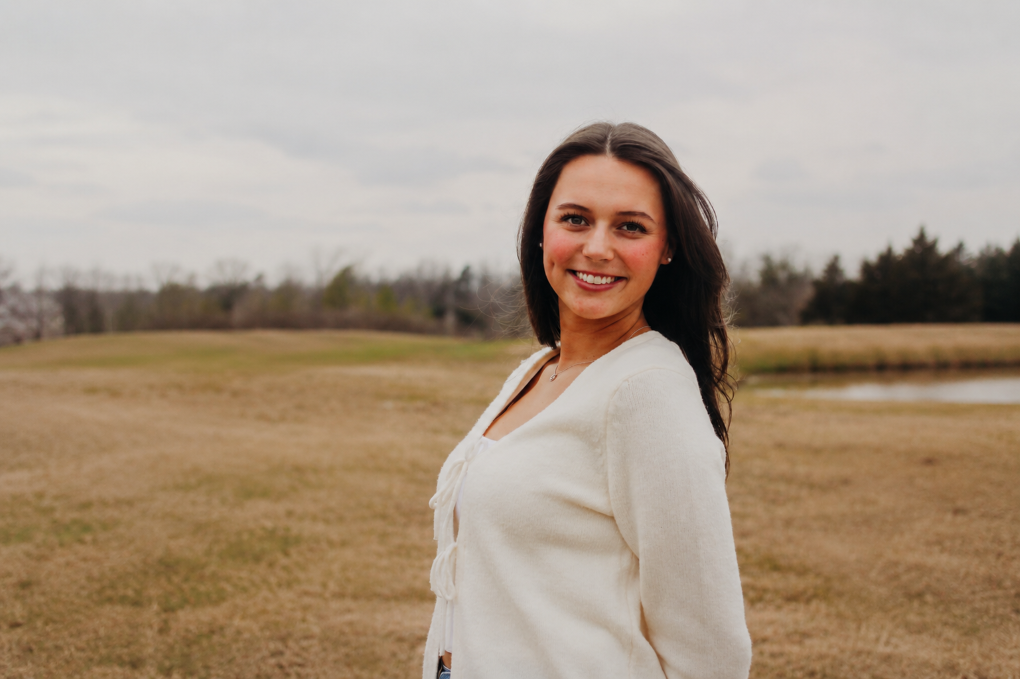
For Audrey Cordier, a senior majoring in speech, language and hearing sciences, every opportunity at Auburn has started with simply asking a question. Through undergraduate research, student leadership, study abroad and service, Cordier has built an Auburn experience shaped by curiosity and initiative.
"A big part of the reason I came to Auburn was because of the generous scholarship they gave me," Cordier said. "I also loved the feel of a college town and the traditions and community that Auburn had. I felt that all of these things would make the transition from being at home to being in college a little bit easier and fun."
After arriving on campus, Cordier quickly discovered a passion for speech, language and hearing sciences (SLHS).
"I knew I really wanted to work with people," she said. "I'm a big talker; that's been known since I was just about born. I knew I wanted to work in a clinical type of setting with young kids and older individuals as well. SLHS really gives me that opportunity."
Speech-language pathologists work with patients across the lifespan, diagnosing and treating voice, language, literacy and swallowing disorders while helping individuals regain communication skills after illnesses such as strokes or neurological conditions.
Cordier's curiosity soon extended beyond the classroom and into undergraduate research.
"I've gotten involved in research projects simply because I've asked a question and the professors have answered it, and it piqued their interests as well," Cordier said. "I've been able to help create projects that look into these types of questions as well as get to know the faculty and create a relationship between us."
One project placed Cordier in Professor Mary Sandage's voice physiology laboratory, where she worked alongside fellow students on a systematic review examining vocal cord dysfunction.
"After participating in two research projects, one with audiology and one with speech-language pathology, I really fell in love with both specialties and I didn't really want to pick," she said. "I decided I wanted to take the extra step of going to medical school so I would be able to serve speech-language pathologists and audiologists in a medical setting."
Expanding her academic experience beyond Auburn's campus, Cordier participated in the Department of Speech, Language and Hearing Sciences' Global Perspectives study abroad program.
Alongside classmates and faculty, she traveled to Ireland and Scotland, visiting autism centers and meeting with the Royal College of Speech and Language therapists to learn how communication disorders are diagnosed and treated in different health care systems.
At home, Cordier credits the College of Liberal Arts’ weekly newsletter with helping her find a position at Auburn Day School, giving her the chance to work with children ranging from 12 months to five years old.
"Within SLHS, you're usually going to be working in a school system and working with teachers, so being able to develop those relationships and see where both teachers and students are struggling has been an incredible opportunity," she said.
Outside the classroom, Cordier has dedicated much of her time to WINGS, a student organization that partners with Auburn's EAGLES Program, which provides a comprehensive college experience for students with intellectual disabilities.
"The EAGLES students really speak for themselves," she said. "They are so incredible and so hardworking. To see them grow from their first year to eventually graduating and independently implementing the skills they’ve learned while at Auburn is truly amazing and very rewarding. Developing friendships with these students on top of the mentorship makes being part of that process even more special."
Looking back on her Auburn experience, Cordier says the common thread connecting every opportunity has been her willingness to ask questions, build relationships and put in the work.
"Through these projects and through developing professional relationships with people, I realized how much you really have to enjoy the things that you're doing," she said. "It's shown me that hard work really does pay off. If you want something, you have to be willing to put in the extra hours, develop relationships, research different things and work toward your goals."
She encourages students not to underestimate the power of simply introducing themselves.
"Some of my best friends I've met simply because I've asked them a question or sat next to them," Cordier said. "If you're struggling to find a place, don't be afraid to talk to people. Auburn is so friendly, and your professors, especially in SLHS, are willing to provide opportunities if you're willing to take them."
As she prepares for medical school, Cordier hopes future Auburn students will embrace the same mindset.
"Auburn gives you what you give it," she said. "If you give Auburn your hard work, your dedication and your responsibility, you're going to be given opportunities that allow you to succeed. Auburn has so many opportunities for students, but they're not going to fall into your lap. Auburn's Creed defines it best: 'I believe in work, hard work.'"
Learn more about Speech, Language and Hearing Sciences at the College of Liberal Arts website.
Tags: Speech Language and Hearing Sciences Students
Related Articles
-

Dance student helps choreograph ‘Fractals: Infinite Movement’
Samantha Briggs, a senior majoring in exercise science with a minor in dance, helped choreograph the department's annual dance concert. -

Auburn students design railroad exhibit for Lee County Historical Society Museum
Students from the Auburn History Club created a new exhibit at the Lee County Historical Society about the thing that literally put Lee County on the map: the train. -

Auburn professor explores benefits of hearing aids on interconnected aspects of physical, cognitive functioning
The project secured funding from the Hearing Industry Research Consortium, which supports research projects that benefit the hearing aid industry and its customers. -

Tiara Ransom selected as student marshal for Auburn University's summer 2024 commencement
Tiara Ransom, a graduating senior in the film program, has been selected to lead the College of Liberal Arts' class of 2024 in this summer's commencement ceremonies. -

Auburn alumni Mike, Leann Rowe invest in School of Aviation’s mission to shape the future of flight
If there’s one thing to know about Mike ’78 and Leann Rowe ’78, it’s that they believe in Auburn and love it. -

Scholarship support shapes student’s path to service across rural Alabama
Clara Ragan planned to plow through college in two or three years and go straight to law school. But the scholarships she received at Auburn changed those plans — and the course of her life.