Auburn students design railroad exhibit for Lee County Historical Society Museum
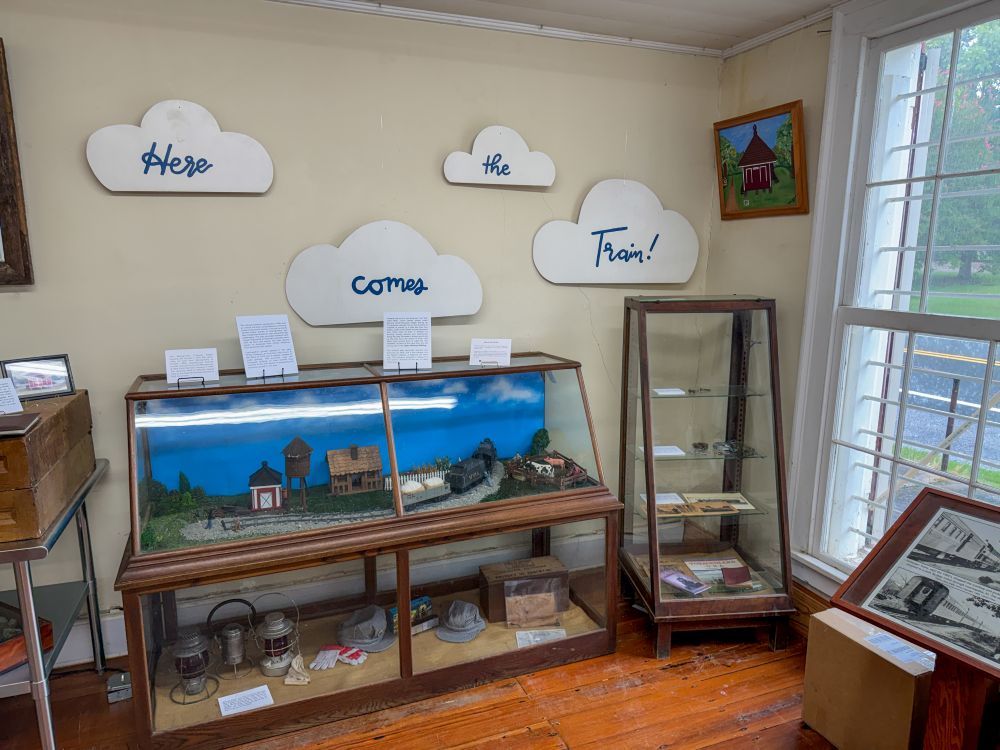
Students from the Auburn History Club created a new exhibit at the Lee County Historical Society (LCHS) about the thing that literally put Lee County on the map: the train.
Recent history graduates Sofia Foradori and Victoria Ashley, co-founders of the Auburn History Club, volunteered at the LCHS and served on its board when they were asked to curate a railroad exhibit.
“The goal was to update the exhibit and make it more cohesive,” Foradori said. “Over the years, different pieces had been added, and a lot of the cohesive narrative had been lost, so we wanted them to have a new exhibit that would bring people in to visit, while also making sure our members got an opportunity to try new design and research opportunities.”
Foradori, Ashley and club members researched, archived, removed and added to the exhibit, as well as managed communication with the board and grant funding.
The trains exhibit tells the story of the railroad, from its arrival in Loachapoka in 1845, through its destruction by General Lovell Rousseau’s “Raiders” in the Civil War and its later expansion across Alabama and Georgia, ending with its decline during the “Panic of 1873” economic collapse.
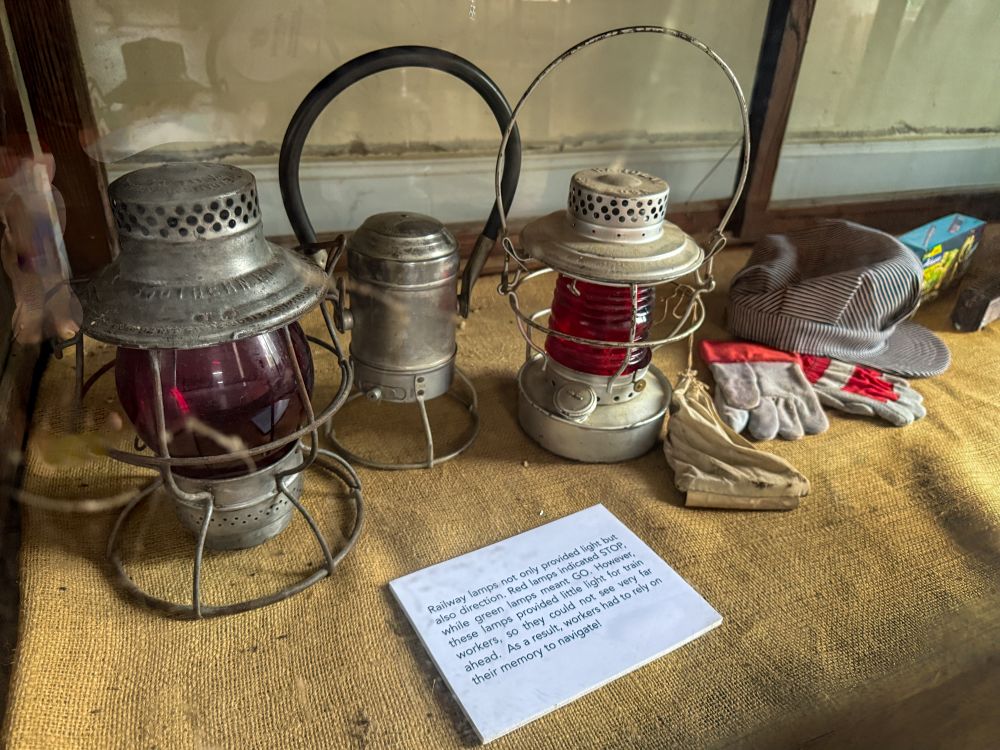
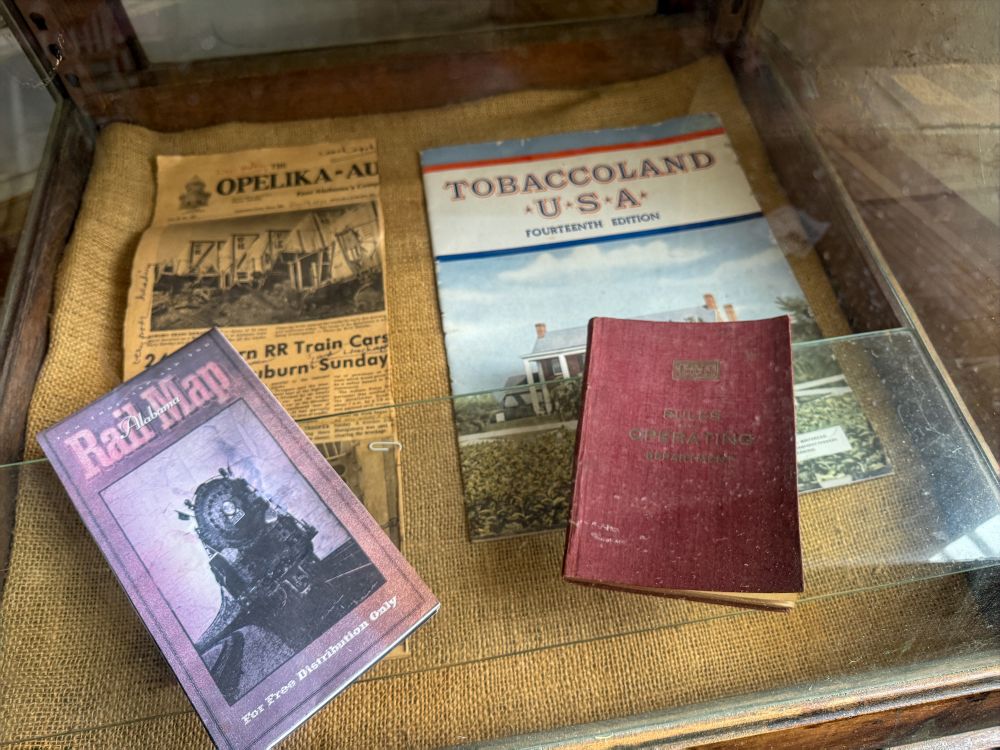
Historical artifacts include century-old railroad maps, railway lamps and a mail bag. The exhibit is designed to provide information not just about the material items, but the experiences of the enslaved people who worked to build the railroad and early residents who benefited from the economic boom the trains brought.
The railroad exhibit is available for visitors in the museum building of Pioneer Park, an 1850s-style village that houses the LCHS in Loachapoka. That building used to be the trade center where trains would deliver supplies, just across the street from the railroad depot.
“Since the exhibit ties so well into the building itself, the great takeaway is that what you’re standing in right now was a central part of what life was like for people when the train was running, and that was really one of the cornerstones of building our community into what it is now,” Ashley said.
The exhibit joins educational setups of a Creek Indian principal town, wildlife diorama, one-room schoolhouse, heritage garden, doctor’s office and log cabin.
School field trips to the museum are an interactive experience, during which children get to interact with the real historical artifacts they’ve learned about in the classroom, including pioneer games, a cotton gin, open hearth cooking and Lee County’s first jail cell.
LCHS Board Member Deborah McCord said the museum’s mission is to present local history to future generations in ways that will engage them to learn more.
“Everything we do here is trying to create a living history experience so that people can understand it better than they could if they just read it in a textbook,” McCord said. “When you know our past, it helps you understand how we became Alabama and Lee County. That helps us understand what’s going on today."
McCord noted that the LCHS hopes to encourage visitors to look at history and ask themselves: "How did we get here? What did the people before us go through?”
The train exhibit is the latest partnership between Auburn and LCHS. For years, faculty and students have served on LCHS’s board and students and faculty alike have volunteered during events to bring history to life.
On Syrup Sopping Day, the society’s signature annual event, representatives from the Harrison College of Pharmacy staff the doctor’s office at Pioneer Park to serve soda and take blood pressure. Former School of Aviation Director James Witte demonstrates blacksmithing at the forge, while brothers from Auburn’s Alpha Phi Omega fraternity work the cookhouse and College of Agriculture students cultivate the garden.
Retired Auburn faculty also serve on the board and teach courses for the Osher Lifelong Learning Institute, the society’s host 4-H group, named “History Seekers,” and for the public on Second Saturdays.
LCHS President Betsy Jordan said the society’s partnership with the Auburn History Club is a natural fit, and Foradori’s and Ashley’s leadership with the new exhibit will help it thrive by engaging younger visitors with history.
“The connection between the university and the historical society is very revered,” Jordan said. “We appreciate the relationships between those that are actively involved on our board and throughout the school year, so what really makes it special for me is the fact that the History Club has taken such an active part.”
Financial support for the History Club’s exhibit was supported by the Robert J. “Jeff” Jakeman Fund for Excellence for Public History through the Caroline Marshall Draughon Center for the Arts and Humanities.
Join the Auburn History Club or learn more about visiting the Lee County Historical Society.
Tags: History Students Center for the Arts and Humanities Community, Outreach and Engagement
Related Articles
-

Auburn music student stars as vocal artist for national ad campaign
Catie Tucker, a music composition and technology senior, lent her voice to Regions Bank's “Embrace the IF in Life” campaign. -

"Fostering Communities" awarded IGP grant
A partnership between Auburn University and Lee County Youth Development Center (LCYDC), “Fostering Communities in the Kitchen and Garden” was awarded a 2020 Intramural Grants Program (IGP) Interdisciplinary Team Research Grant. -

AI through the lens of Hollywood
Auburn University will explore how artificial intelligence has evolved from Hollywood fantasy to real world technology through its annual AI film series, beginning Monday, Feb. 23 with WarGames, followed by Tron: Ares on March 17 and concluding with Wonderland on April 13. -

History professor wins top teaching award for ‘Food and Power’ course
Associate Professor of History Xaq Frohlich has been recognized by the Association for the Study of Food and Society with the 2026 Individual Award for Food Studies Pedagogy for his course on food and power. -

Fast Company: The complicated legacy of Nutrition Facts labels
Associate Professor of History Xaq Frohlich discusses the complicated legacy of the Nutrition Facts label. -

Auburn University’s School of Aviation inks career pathway partnership with Southwest Airlines
The pathway is for individuals interested in pursuing their university degree while building post-graduate flight instructing time within their college’s flight program.