Love language: SLHS student creates communication aid for brother with autism
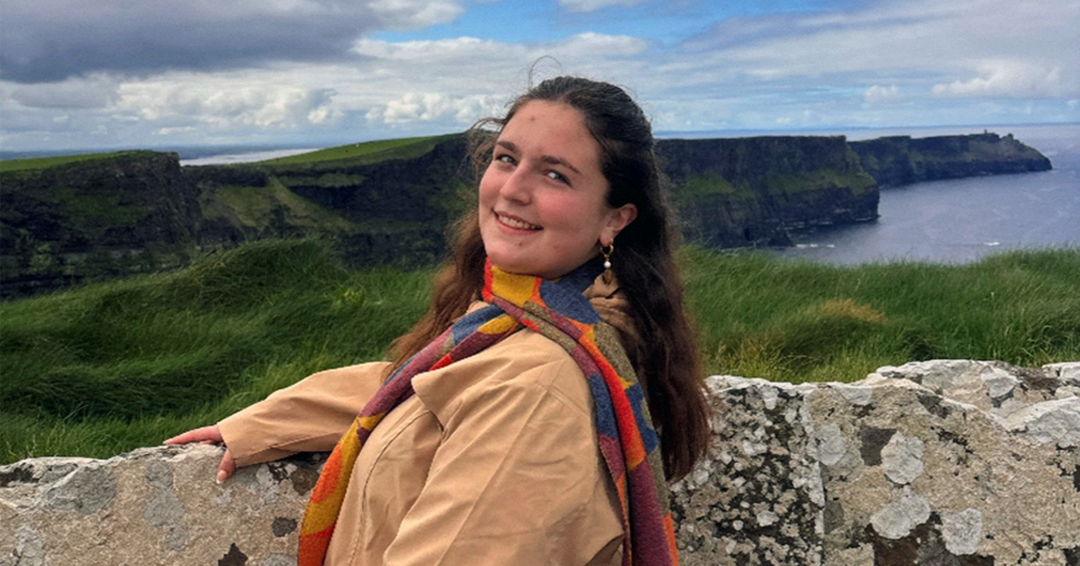
Speech, language and hearing sciences senior Lauren Kutschke’s passion is helping people with special needs communicate more comfortably. After a study abroad program, she started at home with a custom visual communication aid for her brother.
Inspired by Talking Mats, Kutschke designed and printed photos of different things, activities and emotions, then placed them in baseball card sleeves. Her brother organizes them by placing the cards into categories.
Kutschke said it’s a simple, extremely effective way for her to make his life easier.
“He’s awesome. He’s my best friend. We’re the only children, and ever since an early age, we’ve been super close,” Kutschke said. “There’s not a day that goes by in my major that I don’t think about him and how to improve his life. Over the course of my education and the Talking Mats experience, I finally knew what could help him have clarity.”
Kutschke’s brother is semi-verbal and often finds visual and tactile forms of communication appealing. When he wants to call Kutschke, he brings a framed photo of her to their mother. If he wants to watch a specific television program, he presents a stuffed animal of the show’s main character.
Like many people with autism, eye contact and reading facial expressions can be difficult for Kutschke’s brother. Family members may also assume their likes, wants or preferences based on what they’ve enjoyed in the past.
When Kutschke noticed that she sometimes neglected to ask her brother directly what he wanted, because she assumed she already knew the answer, she wanted to find a way to give him more opportunities to express his own preferences.
The cards include everything from picking what to eat for dinner to a set of emotions so her brother can communicate how he’s feeling without the significant mental processing it takes to translate thoughts into speech.
It’s a form of supplemental communication that Kutschke said helps him to better communicate and helps her to better listen.
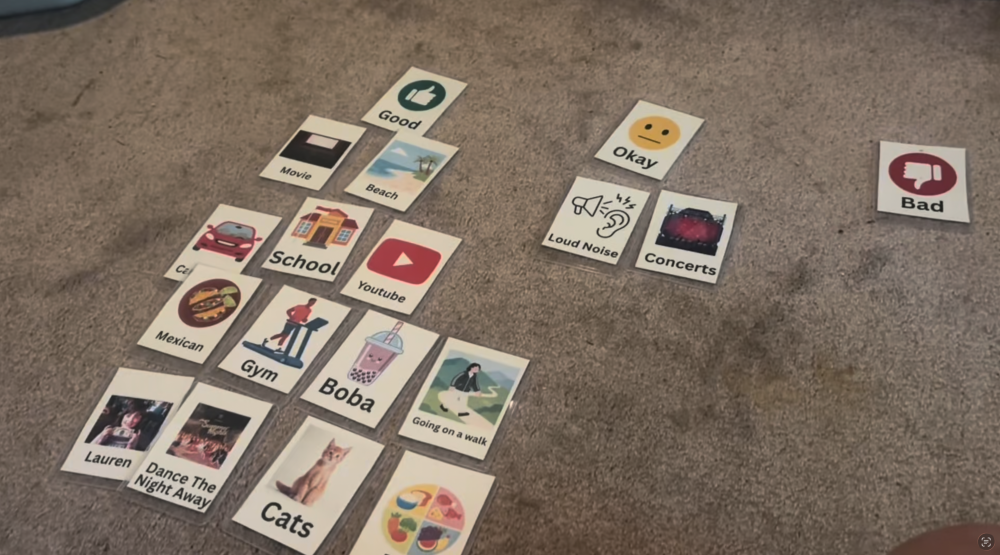
“We have our own way of communicating,” Kutschke said. "Words and pictures mean more to him than seeing a person's face. At one point, he picked up the ‘Cats’ card, and he goes, ‘Cats, that’s good,’ and put it down in the good pile. It’s emotional because you know he likes these things, but we haven’t heard him say it in years.”
Kutschke met Talking Mats Founding Director Lois Cameron during the Global Perspectives in Speech-Language Pathology study abroad program. Led by Assistant Clinical Professor Lydia Matthews and Clinical Professor Laura Willis, the program includes site visits to universities, charities and therapy organizations.
This spring, Auburn students visited Talking Mats at the University of Stirling and met Glenn Carter, head of the Royal College of Speech and Language Therapists in Scotland.
“Lauren exemplifies what we hope all students who choose to study abroad will achieve – taking what they learn and applying it in a tangible way to make a difference for someone’s communication,” Matthews said. “For Lauren, this was directly applicable and personal for her brother. We were thrilled to learn she independently created her own visual support aid and that it was successful.”
Through the program, Kutschke visited autism centers with resources including sensory gyms, work opportunities, game rooms and safe stimulation spaces. In Ireland, she learned about sibling and family support groups, which emphasized care for the whole family.
What impressed her most, Kutschke said, were the people. They are caring, kind and never turn away anyone who needs help.
“I’d see how much they care and how that care and love is global,” Kutschke said. “Most of the people at the centers had personal connections and I could see the same passion that my family has for taking care of my brother and making sure that his life is fulfilling. It was really touching because I never really thought about that on a global scale.”
Speech, language and hearing sciences cover everything from developmental speech and language disorders, stroke recovery and alternative and augmentative communication to hearing amplification, swallowing intervention, social skills and cognitive communication. Clinicians care and advocate for patients throughout their life span, helping them to communicate through expertise, compassion and collaboration.
After graduating in May 2027, Kutschke will pursue a master’s degree in speech-language pathology and complete her license and certifications to become a pediatric SLP. She said the study abroad program confirmed she’s on the right path and ready to specialize in alternative and augmentative communication.
“I got into speech because of my brother,” Kutschke said. “I’ve been so passionate about my major because of him, because we have such a good relationship, and I want him to know that we care about him. All over the world people are trying to help, and it made me feel like I could be a part of that.”
Learn more about how you can help people with an SLHS degree.
Tags: Students Speech Language and Hearing Sciences
Related Articles
-

Student Spotlight: Lydia Gray, Aviation Management
The senior from Decatur says Auburn has prepared her for an exciting career in the aviation industry. -

Finding community: Camp War Eagle leaders help students feel at home
For many students who feel anxious about starting their journey at Auburn, Camp War Eagle is where everything begins to fall into place. -

Elizabeth Porter selected as student marshal for Auburn University’s fall 2023 commencement
Elizabeth Porter, a graduating senior in political science, has been named the fall 2023 graduation marshal for the College of Liberal Arts. -

Study the past, build the future: Auburn History prepares students to be changemakers
In 2026, the Department of History celebrates another banner year for graduate enrollment, post-graduate placement and student and faculty excellence. -

Student Spotlight: CLA Graduation Marshal, Hannah McGill
The Newnan, Georgia, native wasn't sure what to major in, so McGill started off in the Exploratory Program, where she quickly discovered her passion. -

Dance student helps choreograph ‘Fractals: Infinite Movement’
Samantha Briggs, a senior majoring in exercise science with a minor in dance, helped choreograph the department's annual dance concert.