Auburn Symphonic Winds explores music, culture and connection on transformative tour of Japan
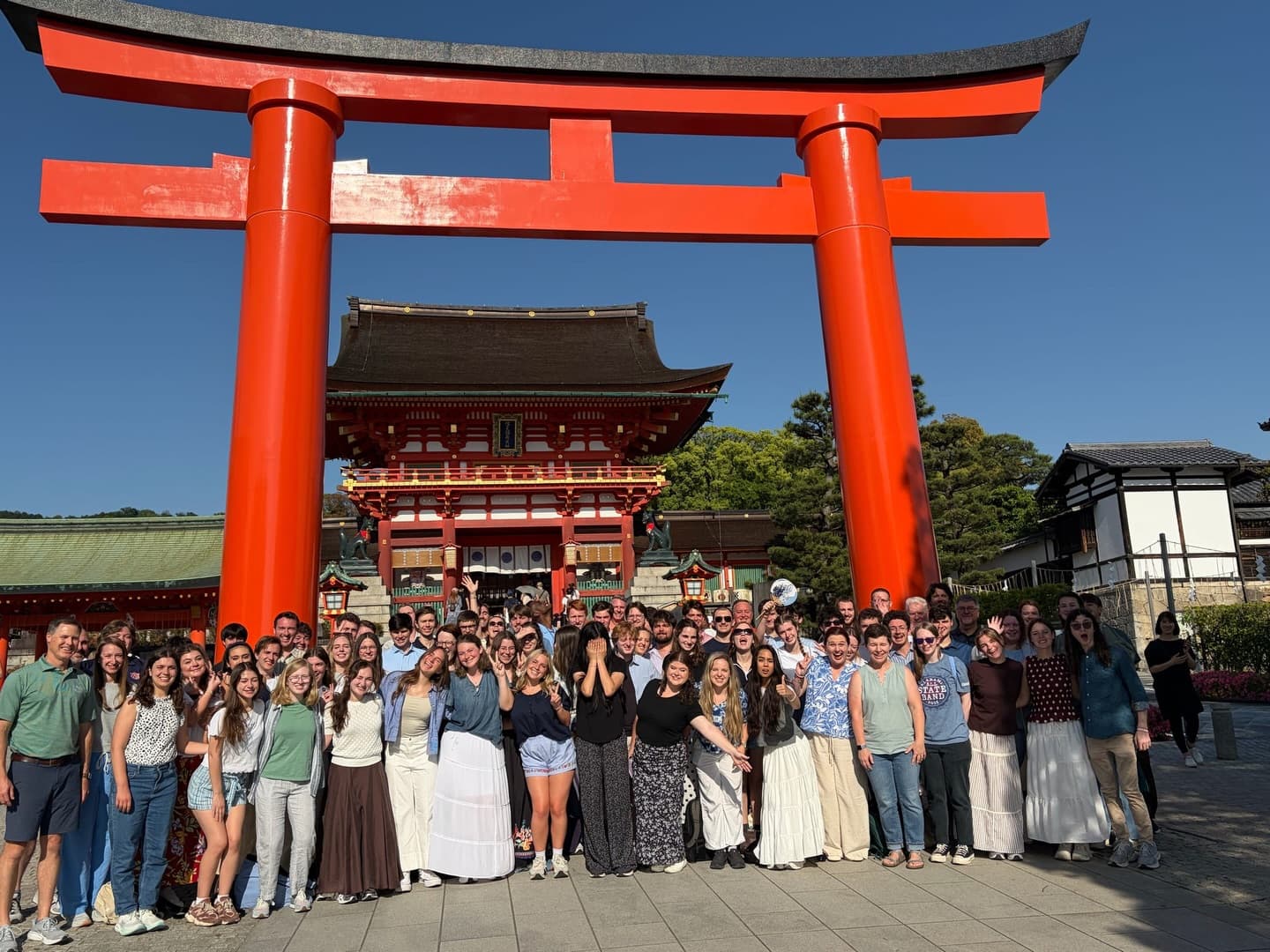
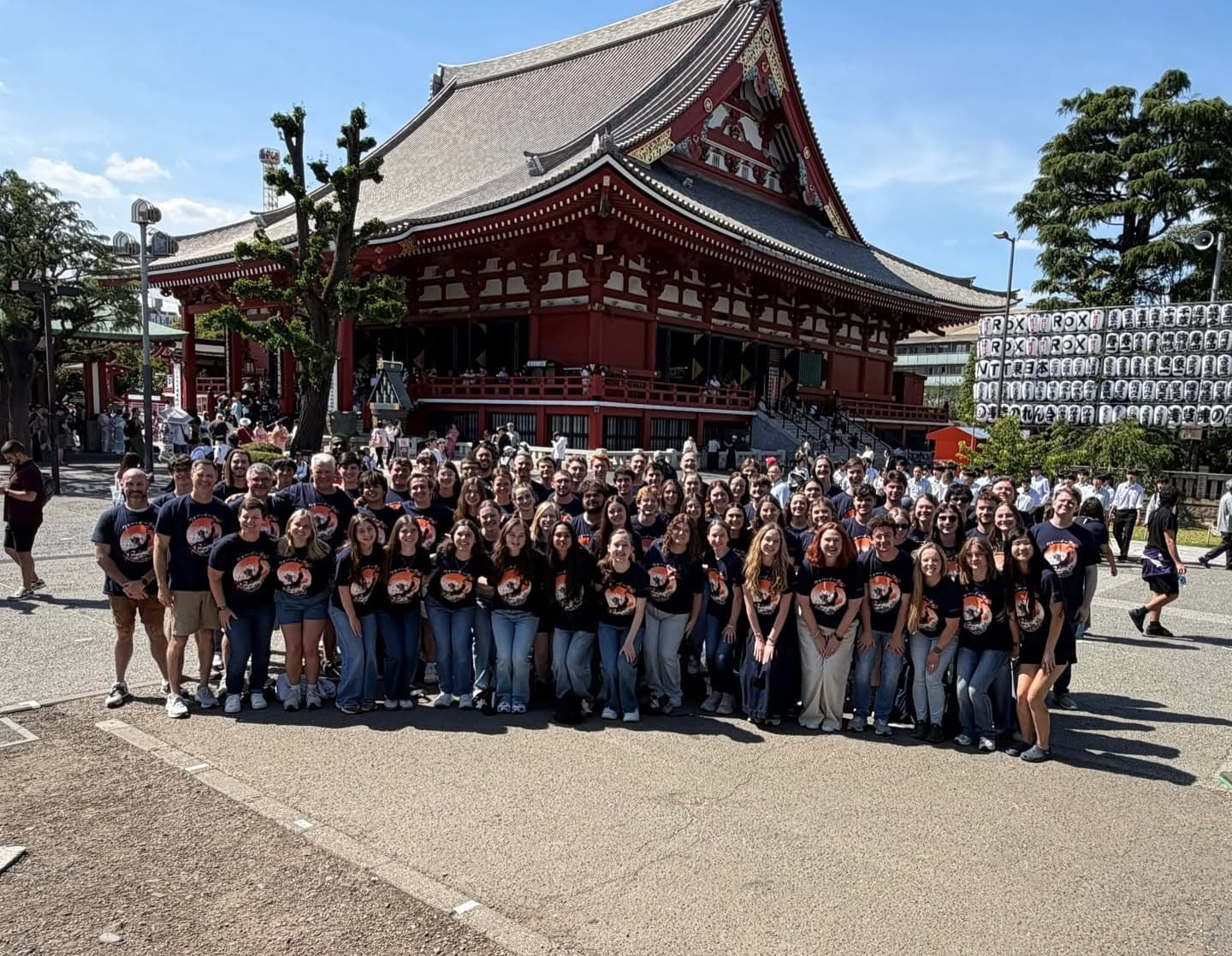
For members of the Auburn University Symphonic Winds — the premier performing ensemble of the Auburn Band program — a recent international tour to Japan was far more than a performance opportunity; it was an experience that reshaped how they understand music, culture and their place in a global community.
Traveling across cities including Tokyo, Hamamatsu, Osaka and Kyoto, the ensemble immersed themselves in a series of joint concerts, cultural exchanges and educational experiences that revealed both the universality of music and the richness of cultural difference.
“This trip really brought to life the idea that music is a universal language,” said Rick Good, Auburn University director of bands and director of the Symphonic Winds. “We all say that; but to actually live it, where language is a barrier and yet the connection is immediate, that’s powerful.”
Music Without Borders
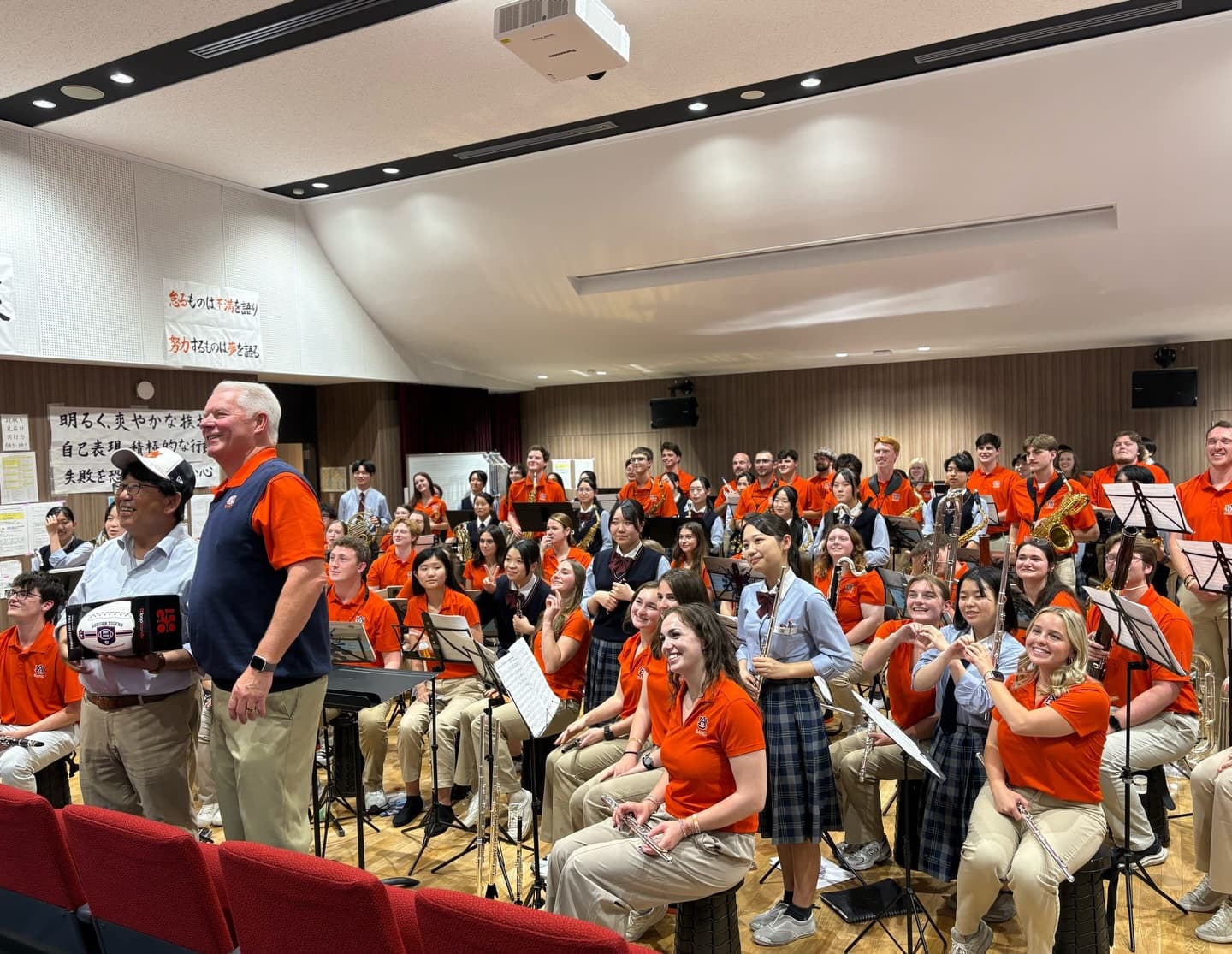
Throughout the tour, Auburn students performed alongside several Japanese school ensembles, including Tokai University Osaka Gyosei High School Wind Orchestra, one of the premier programs in the country, recently selected to perform at the prestigious Midwest Clinic International Band and Orchestra Festival in Chicago.
Surrounded by ensembles of exceptional caliber, Auburn students demonstrated their artistry, preparation and professionalism on an international stage.
“I was incredibly proud of how they responded,” Good said. “The level of musicianship we encountered was remarkable, and our students met that challenge with confidence, artistry and professionalism.”
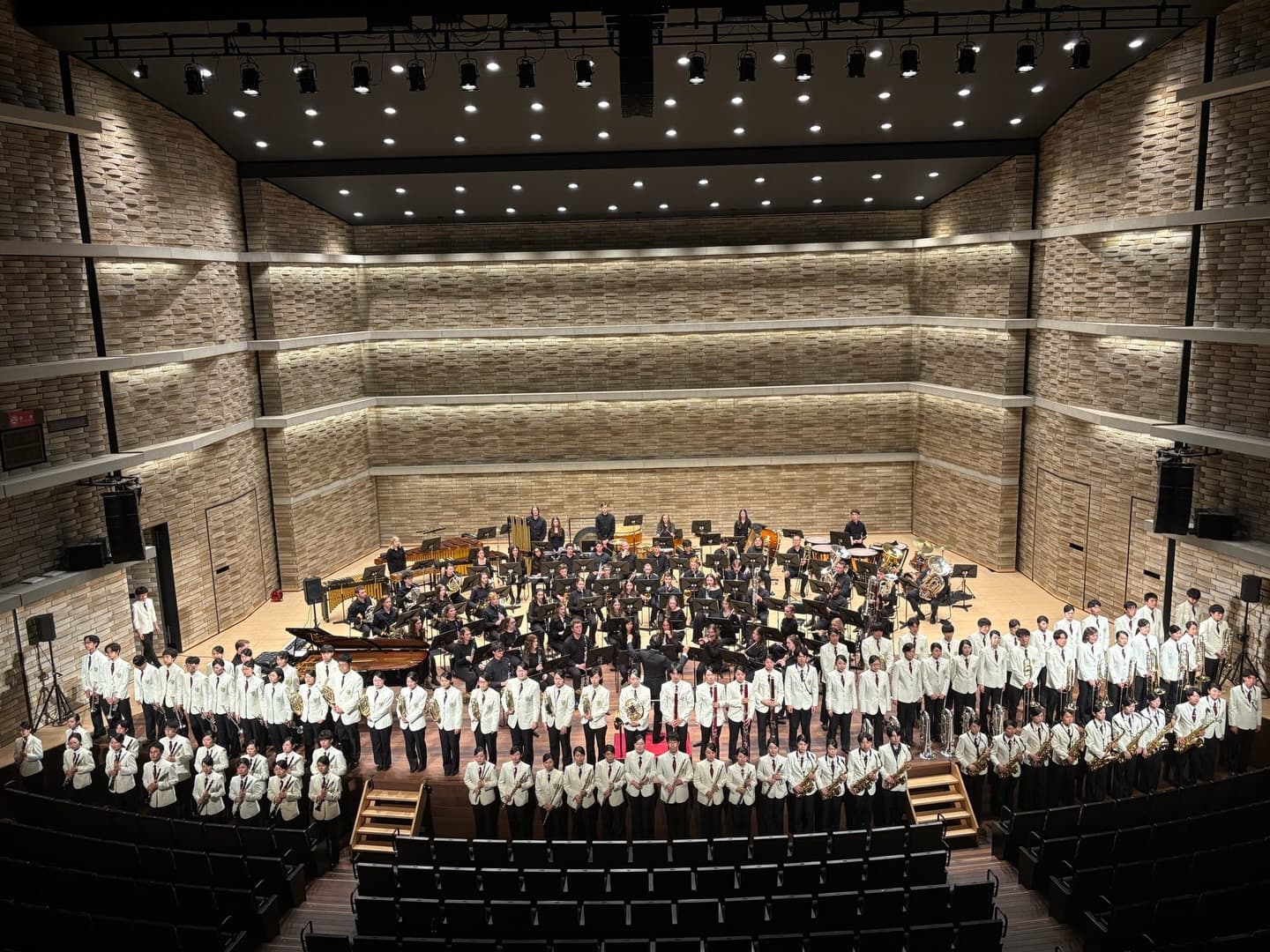
A standout moment came during a collaborative performance in which Auburn musicians accompanied Japanese students who sang a traditional piece, creating a shared musical expression that transcended cultural boundaries.
Across all four concert exchanges, a striking theme emerged: music as a communal, embodied experience.
“At every school, they didn’t just play instruments; they also sang,” Good said. “It was a reminder that music isn’t just about notes on a page. It’s about internalizing sound, listening deeply and connecting.”
That spirit of connection resonated deeply with Auburn students.
“The most memorable moment from the trip was the first post-concert meet and greet with the students,” said Ross Tolbert, oboe player and senior in music education. “Sure, we got to go see wonderful sights and eat great food, but it was the moments we shared through music that were most memorable. The fellowship we shared through such a meaningful musical experience will be with me forever.”
A Broader Vision of Learning
For many students, some of whom had never traveled abroad, Japan offered a powerful new lens on discipline, collaboration and cultural awareness.
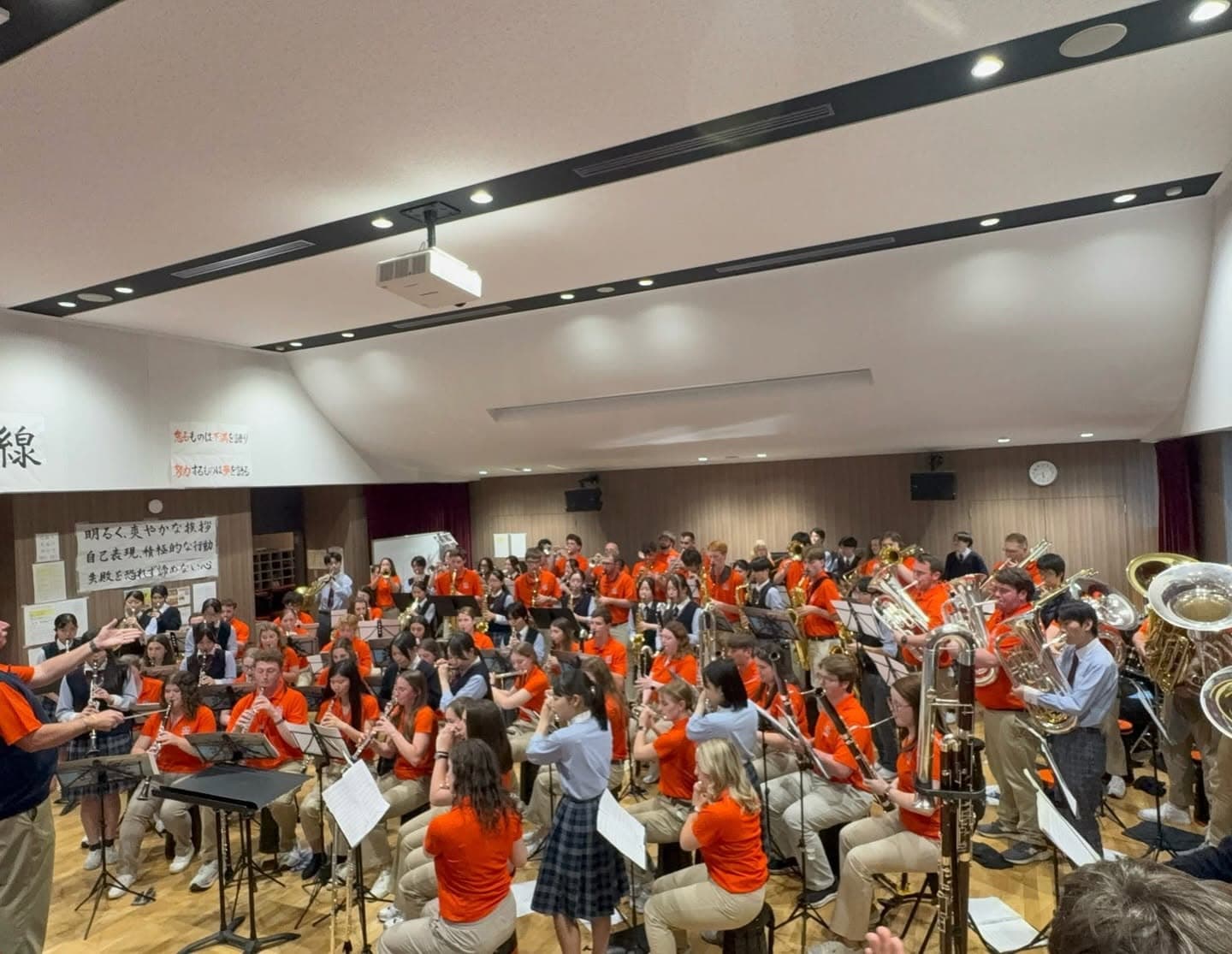
They observed rehearsal environments where students took shared ownership of their ensembles, working seamlessly together to prepare for performances.
“They just knew what needed to be done,” Good said. “That sense of responsibility and pride was part of the culture, and our students saw that.”
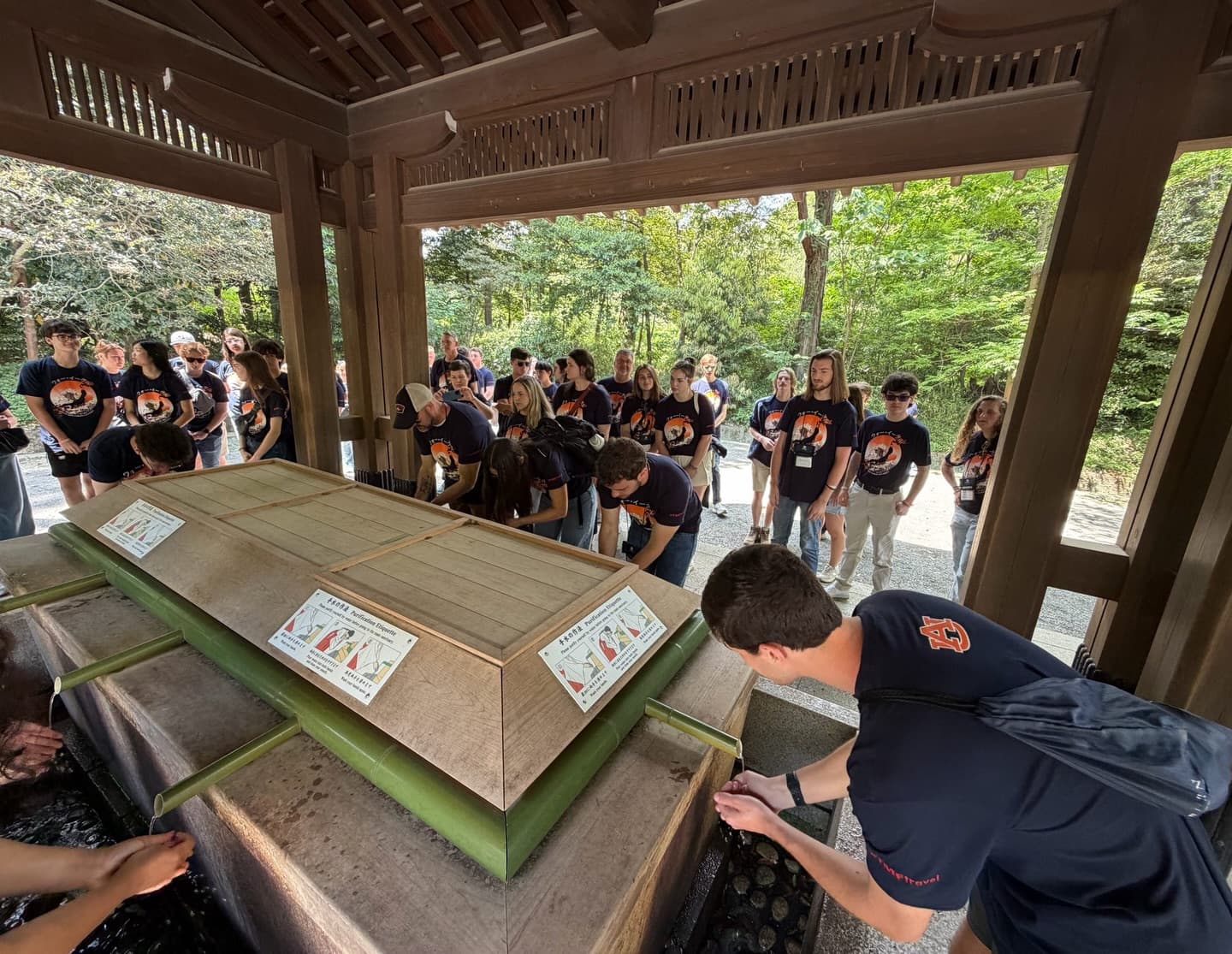
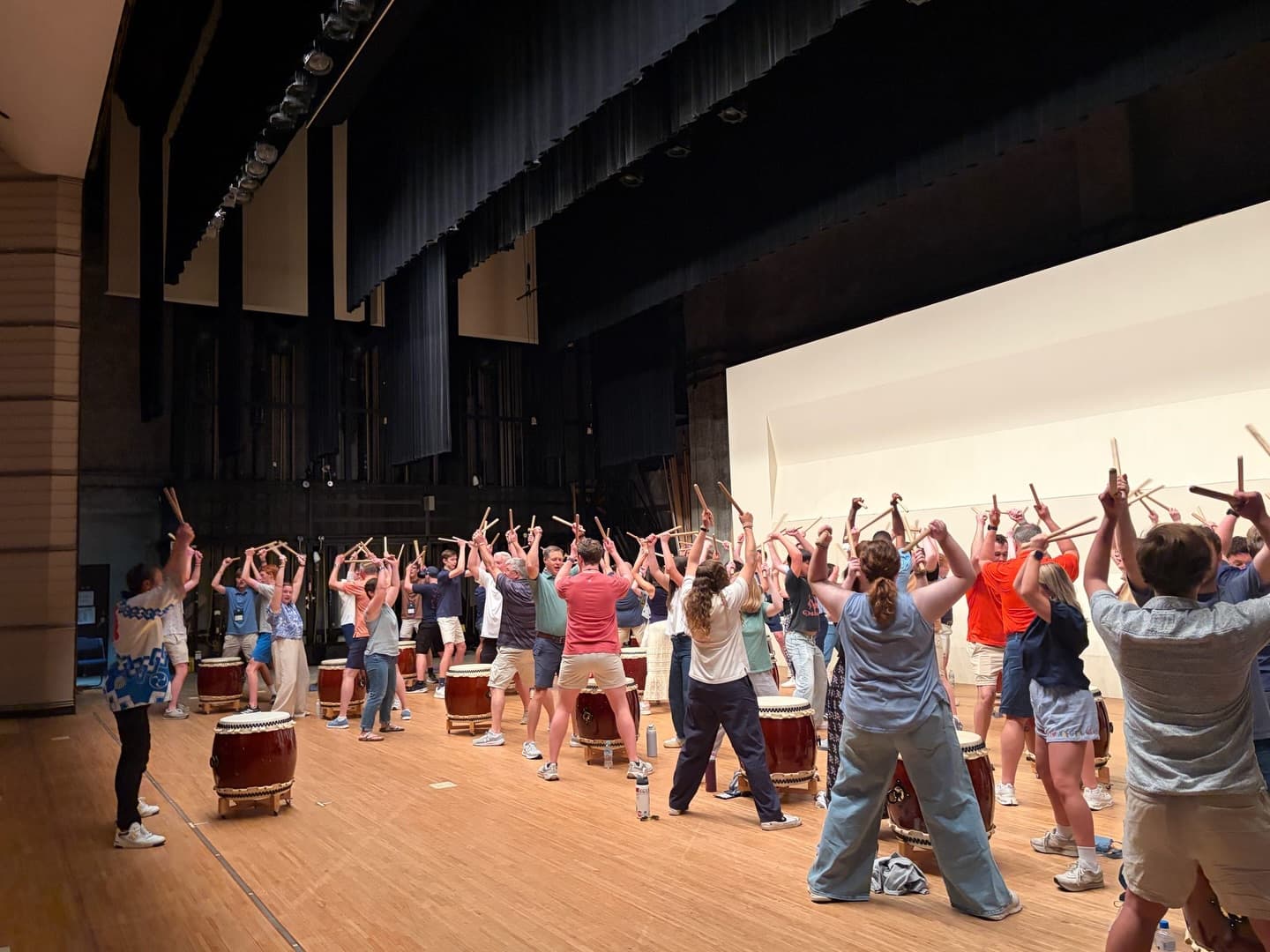
Beyond the rehearsal room, the group explored centuries-old temples and shrines, participated in a traditional tea ceremony and experienced Taiko drumming. Visits to the Yamaha Innovation Center offered an interactive look at the future of music technology, while moments as simple as navigating daily life revealed broader cultural values.
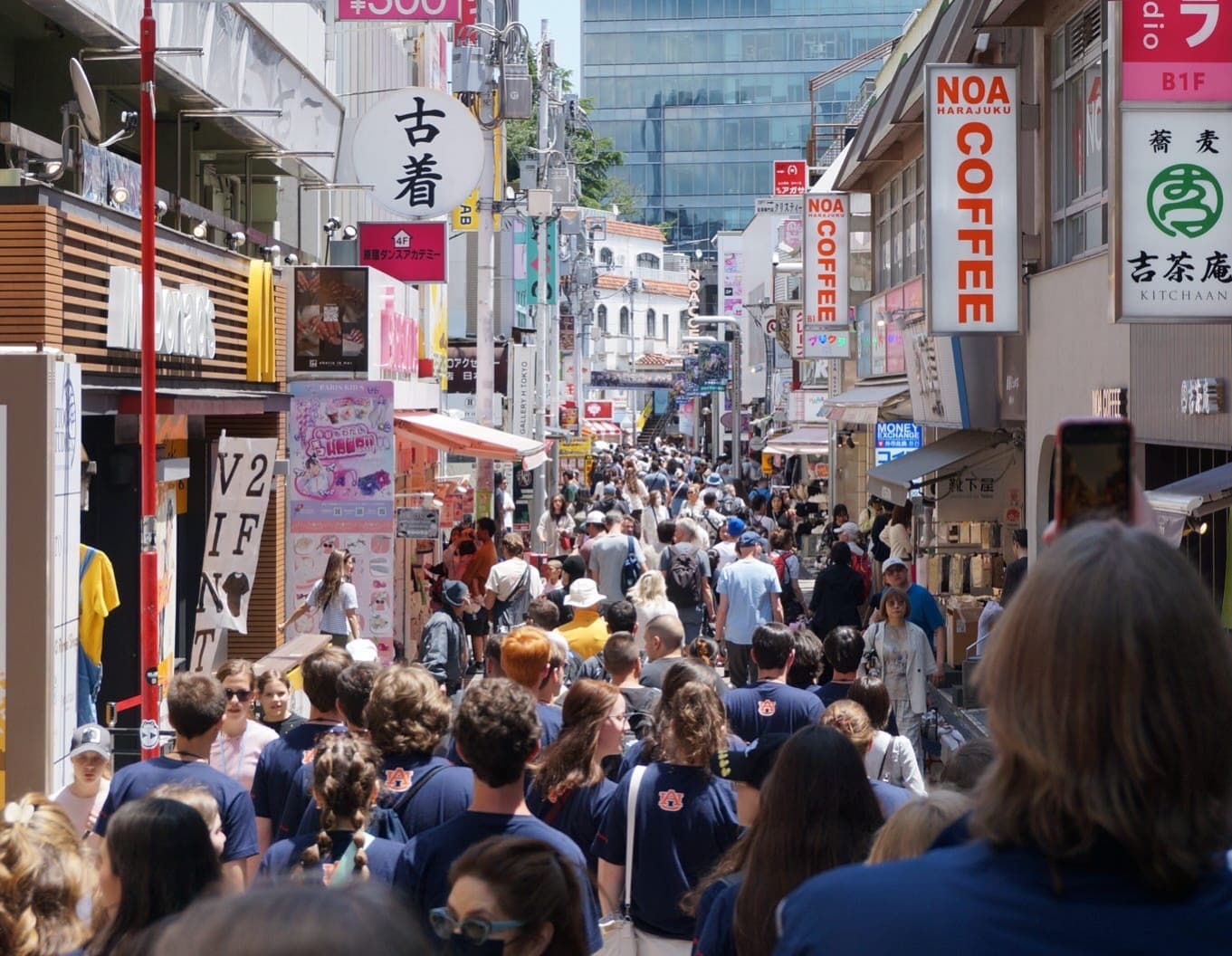
“It changed the way they interacted with the world,” Good said. “You start to understand different ways of living — how people care for shared spaces, how they move through their day, how they respect tradition while embracing innovation.”
These experiences expanded students’ perspectives not only as musicians, but as future educators and leaders.
“This experience showed me just how powerful music can be and gave me new perspective on how we can experience music,” Tolbert said. “As a music education student, this has made me excited to get out and create experiences just like this for my students.”
Meaningful Connections
While the performances were memorable, some of the tour’s most lasting moments happened after the music ended.
Auburn students traded small gifts with their Japanese peers, shared performances and laughter and connected in ways that did not require words.
“They didn’t want to leave,” Good said. “They were showing each other videos, talking about their programs, just enjoying being musicians together. That connection was immediate.”
Those interactions left a lasting impression on many students.
“A moment from this trip that stuck out to me were the social times we had with the Japanese high schoolers,” said Maggie Tonsmeire, flute player and senior majoring in neuroscience and music performance. “Using translating apps and Google, we were able to communicate with each other. Being able to communicate and laugh with others who live across the world from us was a wonderful experience. Performing alongside the students showed that music is truly an international language.”
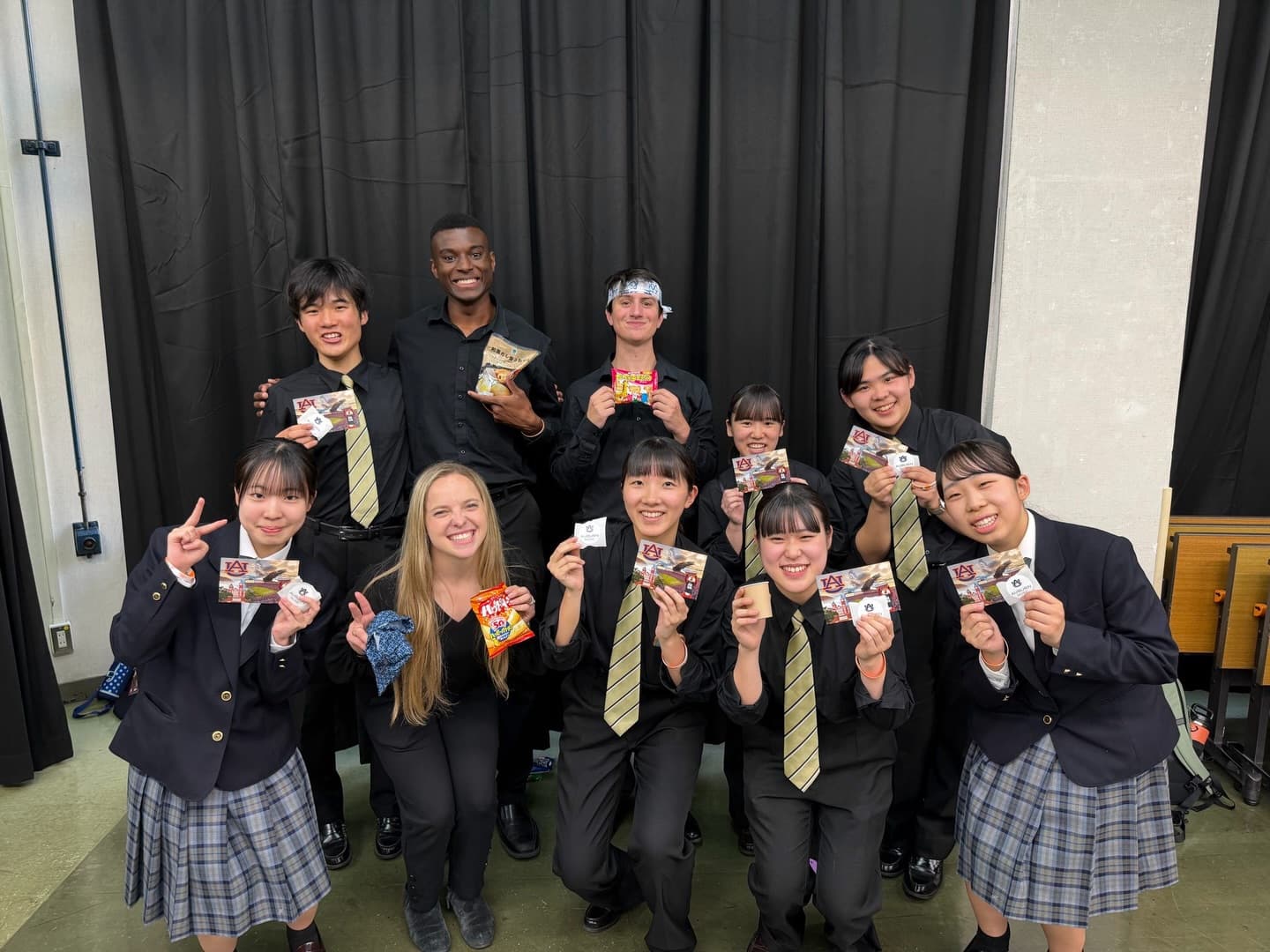
In some cases, Auburn students were met with overwhelming enthusiasm, an exciting reflection of the energy surrounding the exchange. What stood out most, however, was the mutual respect between the groups and the genuine joy of making music together.
“Music can connect anyone no matter the barriers,” said Erin Lockhart, percussionist and recent Auburn graduate in music education. “None of us could speak very much Japanese, and the students we were privileged to have joint concerts with could speak some or little English. Music brought us together and allowed us to share a love and passion that transcends backgrounds or language barriers. We could all connect based on our love for music and sharing it with one another. Because of that, we made lasting memories with one another in ways that wouldn't have been possible without the gift of music.”
Tonsmeire echoed that sentiment, reflecting on the broader meaning of the experience:
“This experience shaped all of the Auburn students who went on the trip. Our eyes were opened to the impact our craft can have on others, and how music affects us. Seeing how music reaches others who have completely different lives than us was amazing. We moved passed the barrier of language and found something uniquely in common, music.”
The Auburn Experience
Experiences like this are central to the Auburn Department of Music’s commitment to preparing students for meaningful careers and lives beyond the classroom.
“Opportunities like this aren’t happening everywhere,” Good said. “To be able to fully immerse students in another culture, perform collaboratively and learn firsthand from musicians across the world — that’s something special.”
The impact is already evident. Students returned energized, inspired and eager for what’s next.
“They’re asking, ‘Where are we going next? What are we playing next?’” Good said. “That kind of excitement comes from experiencing something bigger than yourself.”
Stories like these offer a glimpse into what makes Auburn unique: a program where artistic excellence is paired with global engagement, and where students are challenged not only to become better musicians, but more thoughtful, connected individuals.
“This trip showed our students what’s possible,” Good said. “And once you’ve experienced that, it changes how you see everything moving forward.”
Related Articles
-

History doctoral student investigates Alabama’s underfunded public schools
Brucie Porter hopes to change the conversation around school funding through researching the history of rural, low-income and predominantly Black public schools. -

Craft and community: Actor Michael O’Neill teaches Theatre & Dance students to own their auditions
Character actor Michael O'Neill, whose career spans everything from "Transformers" to "Grey's Anatomy," led realistic auditioning workshops for Auburn Theatre & Dance students this spring. -

Social Justice Lecture Series to address labor markets and the poor
The lecture, titled “Moving the Needle: What tight labor markets do for the poor,” will address the question, “What happens when jobs are plentiful, and workers are hard to come by?” -

ESPN: 'Auburn has produced some amazing broadcasters'
The reputation of the School of Communication and Journalism and its programs were showcased to a national audience on ESPN when ESPN Sideline Reporter Taylor Davis '14 shared a heartfelt tribute to Senior Lecturer Ric Smith during the broadcast of Auburn's homecoming game. -

Auburn public relations students attend PRSSA ICON conference
Students attended breakout sessions discussing crisis communications, earned media relations, diversity and campus, and career training. -

Auburn Political Science honor society receives Best Chapter Award
Auburn University’s Epsilon Nu chapter of Pi Sigma Alpha, the National Political Science Honor Society, has been nationally recognized with a Best Chapter Award for 2024-2025.